Japan Concert Seat Allocation Explained: Why Seats Appear Late
Key Takeaways
- Japan concert seat allocation usually happens after ticket sales. Buyers select or win a ticket category, and the organiser’s system assigns the exact seat later.
- Organisers often reveal seat positions when they issue tickets. Digital tickets may display seat details shortly before the event.
- Lottery-based sales rarely allow buyers to select specific seats. Instead, the lottery determines who can purchase tickets in a particular category.
- Each organiser sets its own seat display schedule. One tour may reveal seats two days before the performance, while another may use a different date.
- Seat preferences never guarantee a particular position. Therefore, avoid making travel plans that depend on receiving a specific seat.
Many first-time visitors expect to see their seat number when they purchase a concert ticket. However, Japanese ticketing systems often work differently. This Japan concert seat allocation guide explains how organisers assign seats, when they reveal them and how visitors can plan around the process.
Buyers usually apply through official ticketing channels. They must follow the Japanese-language instructions and Japan Standard Time (JST) deadlines. If you need assistance, you can request ticket concierge support. Our Tokyo team will explain the available process and confirm exactly what you will receive before you make any payment.
These procedures apply to many popular music events in Japan, including concerts that attract international visitors. This guide explains Japan concert seat allocation in English and introduces the Japanese ticketing terms you may encounter on official websites.
How Does Japan Concert Seat Allocation Work at Issuance Rather Than at Purchase?
Japan concert seat allocation normally involves two stages. First, buyers secure tickets within a particular category. Later, the organiser’s system assigns their exact seats when the ticket becomes available.
The organiser generally controls seat assignments rather than allowing applicants to choose their positions. In many cases, buyers only discover their seats when the organiser issues or displays their tickets. This can happen shortly before the event.
A successful lottery result (tōsen, 当選) gives the applicant the right to purchase tickets in the selected category. The organiser assigns the actual seats later.
What a Buyer Knows at Purchase
Japanese concert ticket sales usually begin with ticket categories. During the purchase process, buyers can identify the event, performance date, venue, ticket category and price.
The organiser’s system normally assigns the concert seats after the sales period closes. Available categories may include:
- Reserved seats (指定席, shitei-seki).
- Seated reserved seats.
- Standing tickets.
- Reserved seats with viewing restrictions.
Our guide to Japanese concert seat types explains these categories in more detail.
However, the purchase confirmation usually does not include the exact seat, block or entry number.
What Appears at Issuance
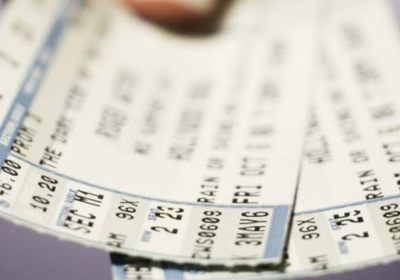
At ticket issuance (hakken, 発券), buyers receive the information that the organiser chooses to display.
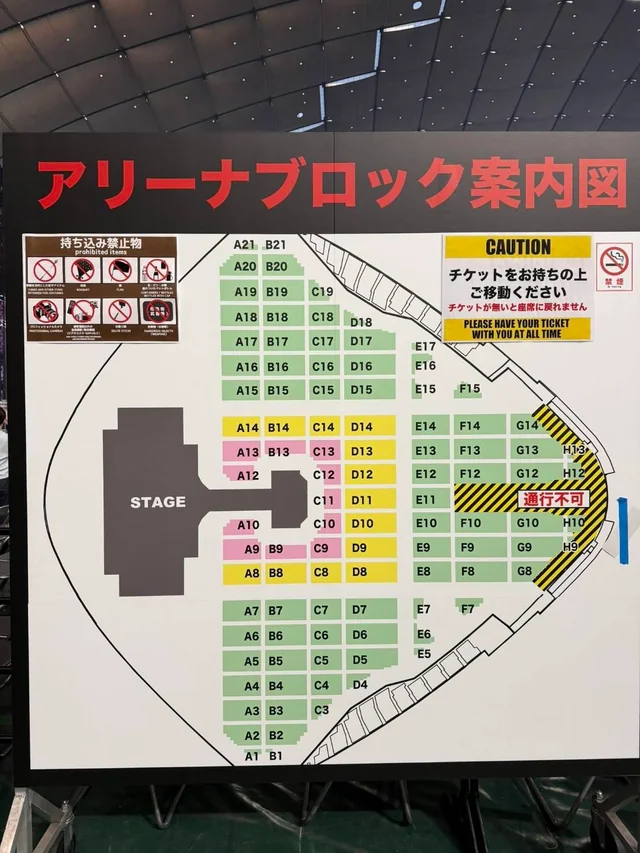
A Japan concert ticket may show a block, row and seat number. Standing tickets usually display an entry number (整理番号, seiri bangō) instead.
Ticket PIA explains on its resale pages that some performances do not display seat numbers. Therefore, ticket information can vary depending on the event.
Seats for Several Tickets
Buying several tickets together does not always guarantee adjacent seats.
For example, a Lawson Ticket event notice for a tour explains that group purchases may result in seats across an aisle or in different rows. Some tickets may also have partially restricted stage views.
Each organiser publishes its own conditions. Always read the event notice before purchasing multiple tickets.
When Are Seats Revealed for a Japan Concert, and How Do Digital Tickets Show Them?
Organisers reveal seats according to their own display schedules. A digital ticket (denshi chiketto, 電子チケット) may show the seat shortly before the concert or even on the event day.
If you want to know when Japan concert organisers reveal seats, check the official e-ticket notice for your specific tour. It should explain the planned display and issuance dates.
An Example from One Tour
The official Mrs. GREEN APPLE e-ticket page provides a useful example.
It explains that buyers receive e-tickets through the play guide’s app. The planned ticket display begins about one week before the performance. However, the seat number appears approximately two days before the show.
The organiser also notifies buyers by email when ticket issuance begins.
These dates apply to that particular tour. Other organisers may follow different schedules.
Display Start Dates
Lawson Ticket’s e-ticket guide explains that tickets become available from the display start date. However, this date differs between performances.
The guide directs buyers to check the individual reception page and their account information.
Therefore, record the display date for every concert you plan to attend. Never assume that all events follow the same schedule.
The Seat Reveal on a Smartphone
Digital tickets appear through the designated ticketing app. Once the display date arrives, buyers can open their tickets and check the available seat information.
Our guide to Japan digital ticket apps explains how these smartphone-based systems work.
Some organisers also allow buyers to transfer tickets to companions through the app using the distribution function (bunpai, 分配).
Before attending the concert, make sure your phone has enough battery power. Also, install and configure the required app in advance. Keep a reliable data connection available on the event day.
Paper Tickets
Paper ticket holders usually collect their tickets after the organiser opens the issuance period.
Many convenience-store collections take place shortly before the concert. Buyers enter a reference number at a store counter or ticket terminal and collect their printed tickets.
The printed ticket normally displays the assigned seat information. Always check the organiser’s website for the collection period and instructions.
A Short Timeline
The following table explains the usual order of a lottery-based ticket sale. The organiser or play guide determines the dates for each stage.
| Step | What happens | Who sets the date? |
|---|---|---|
| Application | The buyer submits an application during the designated period. | The organiser |
| Result | The organiser announces successful and unsuccessful applications (当選 or 落選). | The organiser |
| Payment | Successful applicants pay before the deadline. | The organiser or play guide |
| Issuance or display | The buyer receives or accesses the ticket. | The organiser |
| Seat reveal | The ticket displays the assigned seat or entry number. | The organiser |
Why Is Seat Selection Rare in Lottery-Based Sales?
Lottery-based sales rarely allow seat selection because the lottery determines who can purchase tickets within a category. After the sale, the organiser’s system assigns seats from the available inventory.
This explains why searches for Japan concert tickets without seat selection often lead to similar information.
Ticket PIA’s seat-selection guide explains that only certain performances offer seat-selection purchases. These events display a specific seat-selection mark. The guide also confirms that buyers cannot use this option for lottery-format receptions.
Where Seat Selection Does Appear
Some non-lottery sales allow buyers to select their seats.
Ticket PIA explains that certain performances let buyers choose an individual seat or select an area (block) instead.
During the purchase process, check which option applies. The available choices and symbols vary between performances.
Always use the official event sales page as your main reference.
What This Means in Practice
For most major concerts, the lottery determines who can purchase tickets, while the organiser’s system determines where each buyer sits.
If you prefer a particular viewing area, check the category descriptions before applying. However, remember that the organiser still controls the final seat assignment.
The Ask Japan Tickets team cannot select seats or guarantee a particular position.
What Is the Fairness Logic Behind Late Seat Disclosure?
Official ticketing pages do not usually provide one universal explanation for late seat disclosure. However, the sales structure shows a consistent approach.
Organisers assign seats through their systems after sales close and stage arrangements become clearer. The following points explain this process. They describe how the system works rather than stating an official reason from any particular organiser.
Lotteries Distribute Tickets According to Rules
A lottery gives applicants a chance to purchase tickets under the rules of a particular sales round. It avoids making purchase opportunities depend entirely on who refreshes a webpage fastest.
If successful applicants could immediately choose any available seat, the selection process could create another competition.
Instead, organisers retain control over seat assignments and distribute available positions through their systems.
Stage Layouts Are Finalised Late
Concert production arrangements can change close to the performance date. These changes may affect stage visibility and the availability of certain seats.
Organisers identify seats with restricted views as partial-view or annotated seats. They may also release additional seats through separate sales rounds.
Check the organiser’s website for details about each sales round. Our guide to Japan ticket sale stages explains how these stages fit into the wider ticketing process.
Face Value and Fair Distribution
Organisers set the face value of concert tickets. The Act on Ensuring the Proper Distribution of Show and Event Tickets (Act No. 103 of 2018) establishes a legal framework for proper ticket distribution.
Our overview of Japan ticket resale law explains the relevant rules.
Late seat disclosure forms one part of a ticketing system that keeps seat allocation under the organiser’s control.
How Should You Set Realistic Expectations When Planning Travel?
Treat your seat as unknown until the organiser reveals it. Choose travel arrangements that do not depend on receiving a particular position.
Many international visitors plan their trips around concerts. Meanwhile, ticket payment, issuance and seat display can happen at different times during the weeks before an event.
Our guide to planning a Japan trip around a concert covers the wider travel arrangements.
What to Fix and What to Leave Open
You can plan around details that the organiser confirms during the sales process:
- Event date.
- Venue.
- Ticket category.
- Ticket price.
However, leave the following details open until the organiser reveals them:
- Exact seat number.
- Block or row.
- Standing entry number.
If you want to understand concert ticket costs in Japan, check the face value on the organiser’s official page. Remember that the play guide may add separate service and processing fees.
Fees and Payment
Organisers set ticket face values, while play guides publish their own additional fees. These charges vary depending on the seller and event.
Buyers commonly pay for Japan event tickets by credit card or at a convenience store (konbini, コンビニ).
If you plan to buy Japanese concert tickets from overseas, check the accepted payment methods and additional charges before applying.
Time Zones and Deadlines
Japanese ticketing platforms publish application, payment and display deadlines in Japan Standard Time (JST, UTC+9).
For example, a display scheduled for 12:00 JST begins at 03:00 UTC.
London is nine hours behind Japan during winter and eight hours behind during summer. Therefore, convert each deadline into your local time zone to avoid missing an important step.
Flexible Bookings
Avoid committing to non-refundable travel arrangements before you secure and pay for your ticket.
Also, allow some flexibility because the organiser may reveal your seat shortly before the concert.
If your plans change, an official resale service may provide an alternative, provided the organiser offers one for that event.
Which Japan Concert Seat Allocation Tips Help First-Time Overseas Fans?
Three habits can make the process easier: read the organiser’s e-ticket instructions, convert deadlines into your local time zone and keep your travel arrangements flexible.
Japan concert seat allocation follows the same general rules for international visitors and local fans. However, tourists and overseas fans should pay particular attention to ticket display dates when planning their trips.
Practical Japan Concert Seat Allocation Tips
- Read the organiser’s e-ticket notice. Check the planned display date and ticket collection method.
- Review the ticket category. Look for partial-view restrictions and seated-only conditions.
- Understand group seating. Multiple tickets may not guarantee adjacent seats.
- Do not assume you can select a seat. Lottery-based sales generally do not offer this option.
- Prepare your smartphone. Install the required app, complete registration and charge your phone.
- Keep travel arrangements flexible. Avoid non-refundable bookings that depend on receiving a particular seat.
Japan Concert Seat Allocation Checklist
Use this checklist before applying for tickets:
- Confirm the organiser, venue and event dates on an official website.
- Check the ticket category and its conditions.
- Record the application window, result date and payment deadline in JST.
- Record the planned ticket issuance and display dates.
- Convert every important date into your local time zone.
- Check whether the event uses paper tickets or digital tickets.
- Confirm which smartphone app you need.
- Review any partial-view or seated-only restrictions.
- Keep your travel bookings flexible until you secure and receive your tickets.
How Ask Japan Tickets Can Help with Seat Allocation Timing
Ask Japan Tickets helps international visitors navigate Japan concert seat allocation by monitoring official ticketing stages and assisting with the application process.
Our Tokyo team explains the available services and confirms exactly what you will receive before you make any payment.
We offer five main service lines:
Event and Application Alerts
We notify you when ticket applications and sales open. This helps you follow important deadlines, even when you live in a different time zone.
Lottery and Application Service
We help submit ticket applications correctly and within the required deadlines for the rounds you want to enter.
Local Payment Settlement
We assist with payments made in Japan and help complete them within the deadline following a successful application.
Ticket Receipt in Japan
We receive and check physical tickets in Japan. We can also hold them safely until your arrival.
Digital Ticket Setup Support
We help configure smartphone tickets and check that they display correctly before the event.
Our team uses the appropriate ticketing channels and confirms important details in advance. These include the ticket type, collection or delivery method and any entry conditions set by the organiser.
However, organisers control seat assignments. We cannot guarantee a preferred seat, and ticket availability depends on the organiser’s sales process and lottery results.
For further information, visit the Ask Japan Tickets FAQs.
Conclusion
Japan concert seat allocation follows a straightforward process. Buyers first secure tickets within a category, and the organiser’s system assigns their exact seats afterwards. The organiser then reveals the seat information when the ticket becomes available.
Display dates vary between events, and lottery-based sales rarely offer seat selection. Therefore, international visitors should check official notices and avoid making travel arrangements based on a particular seat preference.
Understanding the process helps you manage applications, payments and travel with greater confidence.
Tell us which concert you want to attend. Our Tokyo team will explain the available options and confirm exactly what you will receive before any payment.
FAQ: Japan Concert Seat Allocation

When Are Seats Revealed for a Japan Concert?
The seat display date varies by event. One official tour notice states that e-tickets should become available about one week before the performance. It also schedules seat number disclosure two days before the show.
Other tours follow different schedules. Lawson Ticket confirms that display dates vary by performance. Always check the organiser’s official notice for the correct dates.
Can I Choose My Seat at a Japanese Concert?
Most Japanese concert ticket sales do not allow applicants to choose their exact seats. Instead, the organiser’s system assigns positions after the purchase process.
Ticket PIA explains that only certain performances offer seat selection. It also confirms that buyers cannot use this option for lottery-format receptions.
The event sales page explains whether you can select an individual seat or an area. The Ask Japan Tickets team cannot choose seats for customers.
Will Tickets Bought Together Be Seated Together?
Not always. A Lawson Ticket event notice explains that group purchases may result in seats across an aisle or in different rows.
Conditions vary between events, so check the organiser’s notice before purchasing several tickets.
The Ask Japan Tickets team can confirm the conditions that apply to your request before any payment.
Do All Tickets Show a Seat Number?
No. Some tickets do not display individual seat numbers.
Ticket PIA explains that certain performances omit seat numbers. Standing tickets may display an entry number instead.
The organiser determines the information shown on each ticket. Check the official sales page and ticket instructions for details.
How Should I Plan Travel If the Seat Is Revealed Late?
Treat your seat as unknown until the organiser’s display date. Avoid non-refundable travel bookings that depend on receiving a particular position.
Record the ticket issuance and seat display dates in Japan Standard Time. Then convert them into your local time zone.
The Ask Japan Tickets team can help monitor the ticketing process and assist with the relevant arrangements. However, the organiser retains control over seat allocation, and no particular seat is guaranteed.