Wheelchair Accessible Concerts in Japan: Practical Seating Guide

Key Takeaway
Wheelchair accessible concerts in Japan use a dedicated allocation of wheelchair seats (kurumaisu-seki, 車椅子席), which each event organiser manages.
The application process varies by event. Some organisers include a wheelchair option in the main ticket application, while others accept requests through an enquiry desk or dedicated telephone line.
Most wheelchair allocations include space for a companion. However, the organiser decides how many companions may attend, whether they need tickets and how much they must pay.
Because wheelchair spaces are limited, organisers assign their locations. Applicants generally cannot choose a specific seat.
Organisers may also require advance notice or documentation. Therefore, confirm these arrangements well before the event.
Wheelchair accessible concerts in Japan offer international visitors an opportunity to enjoy live music while planning for their access needs. However, the accessible-seat application often runs separately from the main ticket sale. Understanding the process beforehand can make your concert experience much smoother.
This guide explains:
- How to apply for accessible concert seats in Japan
- How companion support and ticket allocations work
- What to expect at major domes and arenas
- What advance notice and documentation organisers may request
- How to coordinate accessible arrangements through a concierge
If you would like our Tokyo team to coordinate these arrangements, you can request ticket concierge assistance. You can also browse our music events in Japan for current listings.
How Wheelchair Accessible Concerts in Japan Work
In Japan, you must request an accessible seat through the application route specified by the event organiser. Wheelchair seats usually form a limited allocation within the venue.
Depending on the event, organisers may ask you to request a wheelchair seat during the main ticket application, after securing a ticket or through a separate channel.
The Three Common Application Routes
1. An option within the main application
Some ticket sales include a wheelchair-seat option on the application screen. In this case, you can submit your request together with your lottery (chūsen, 抽選) application.
2. A request after securing a ticket
For some concerts, you first obtain a regular ticket through the main sale. Afterward, you contact the organiser’s enquiry desk and request a wheelchair space.
3. A dedicated application channel
Some events accept wheelchair-seat requests only through a specific channel, such as a telephone line operated by the organiser.
The event notice (kōen gaiyō, 公演概要) and its detailed notes (chūi jikō, 注意事項) usually explain the applicable process. Look for the section headed 車椅子をご利用のお客様, which means “for customers using a wheelchair.”
Why Organisers Manage Wheelchair Seats Separately
Wheelchair spaces occupy fixed areas within a venue. For example, organisers may place them on a concourse or on a level with step-free access.
Because the number of spaces is limited and the stage layout affects their location, organisers manage these seats separately from general seating.
This process is one of the features that distinguishes Japanese ticketing from other markets. For more information, read our guide to Japan vs Western ticketing.
Disability Tickets in Japan and Pricing
Each organiser sets the price of accessible tickets. Some events charge the standard ticket price for both the wheelchair user and the companion. Others offer a separate price for accessible seating.
Therefore, no single national pricing rule applies to every concert. Always check the official event notice for the ticket price and companion conditions.
Companion Support and Accessible-Seat Allocations

Most wheelchair-seat allocations include space for a companion (tsukisoi-sha, 付添者, or kaijo-sha, 介助者) who assists the wheelchair user.
However, the organiser determines how many companions may attend, whether each companion needs a ticket and where companions sit.
An Example from Tokyo Dome
Tokyo Dome publishes detailed information about wheelchair seats for Yomiuri Giants home games. According to its official information:
- Number of seats: The infield concourse has 30 wheelchair seats, with 15 on the first-base side and 15 on the third-base side.
- Price: The ticket costs ¥2,600 for adults, students and companions.
- Companions: Each wheelchair user may bring up to two companions. Companions cannot attend independently.
- Seat preference: Visitors may request the first-base or third-base side, but they cannot select a specific seat.
- View: Some wheelchair seats may have a partially obstructed view because of pillars.
These arrangements apply to baseball games. Concert organisers may use different seating layouts and application rules at the same venue. Therefore, confirm wheelchair access separately for every concert at Tokyo Dome.
An Example from Grand Sumo
The Japan Sumo Association offers a wheelchair-seat ticket that covers the wheelchair user and one companion.
According to the association’s price list for its Tokyo tournaments, the ticket costs ¥8,000 on any day of the tournament.
However, applicants must use the association’s dedicated sumo telephone line. The association also specifies when it begins accepting requests.
What a Wheelchair Allocation Means in Practice
Keep these points in mind when applying:
- Limited availability: Venues offer far fewer wheelchair spaces than general seats. Therefore, submit your request as early as possible.
- Assigned location: The organiser chooses the location, which may be at the rear or side of a section to provide step-free access.
- Companion seating: Organisers usually place companions beside or near the wheelchair user.
If children will attend as companions, check our guide to Japan concert age restrictions for information about applicable age rules.
Venue Accessibility at Major Domes and Arenas
Major domes and arenas in Japan generally provide facilities such as step-free routes, lifts, accessible toilets and wheelchair spaces.
However, facilities differ by venue and event. For this reason, check the venue’s official website before booking.
A barrier-free venue in Japan (bariafurī, バリアフリー) usually describes its accessible facilities on a dedicated information page.
Tokyo Dome
Tokyo Dome forms part of the Tokyo Dome City complex in Bunkyo, Tokyo. Visitors can reach it from Suidobashi, Korakuen and Kasuga stations.
According to the official Tokyo Dome City guide:
- Barrier-free toilets are available inside the stadium on the first and second floors.
- Several toilets include facilities for visitors with a stoma and care beds.
- Tokyo Dome City lends wheelchairs to visitors.
- Its car parks provide accessible parking spaces.
Other Major Venues
| Venue | Location | What to Check |
|---|---|---|
| Tokyo Dome | Bunkyo, Tokyo | Event-specific wheelchair application, accessible gates and toilets |
| Saitama Super Arena | Saitama Prefecture | Lift access and wheelchair spaces for the event layout |
| K-Arena Yokohama | Yokohama, Kanagawa | Accessible entrances and seating levels |
| Kyocera Dome Osaka | Osaka | Accessible gates and routes from nearby stations |
| MUFG Stadium (Japan National Stadium) | Kasumigaoka, Shinjuku, Tokyo | Wheelchair seating areas and accessible gates |
Venue names in Japan sometimes change under naming-rights agreements. Therefore, confirm the current official name before travelling.
Getting to the Venue
Public transport in Japan offers extensive accessibility facilities. According to the Japan National Tourism Organization (JNTO), about 95 percent of Japan’s train stations are entirely accessible, with lifts, ramps and staff who can assist with boarding.
However, most standard taxis cannot carry electric wheelchairs. If you need a taxi, arrange suitable transport in advance.
On event days, stations near large venues become extremely crowded. After the concert, many domes use regulated exit (kisei taijō, 規制退場), which releases audience sections one at a time.
On the Day of the Event
Arrive early so you have enough time to find the correct gate and speak with venue staff before the main entry queues form.
Japanese venue staff generally guide wheelchair users along step-free routes to their seating areas. The organiser’s notice may also specify a particular gate or meeting point.
Keep your ticket, wheelchair-seat confirmation and any requested documentation together and easy to access.
After the performance, staff may ask wheelchair users to wait until the main crowd has left. This allows them to guide visitors safely through the venue.
Advance Notification and Documentation
Organisers may require advance notice of wheelchair use. In some cases, they also request documentation.
Because each event sets its own requirements, read the official event notice carefully before applying.
Advance Notice
Many organisers ask wheelchair users to contact them before a stated deadline so they can prepare an accessible space.
Some require notice during the ticket application. Others specify a number of days before the performance.
If you miss the deadline, the organiser may not have a wheelchair space available, even if you already hold a ticket.
Therefore, contact the organiser as soon as you know which concert you want to attend.
Documentation
Some organisers ask visitors to present documentation at the venue, such as Japan’s disability certificate (shōgaisha techō, 障害者手帳) or an equivalent document.
However, each organiser decides whether to accept documentation issued outside Japan. Do not assume that an overseas certificate will automatically meet the requirements.
The Ask Japan Tickets team checks this requirement for each accessible-seat request before payment.
Other Information Organisers May Request
Organisers may also ask for:
- The wheelchair type, such as manual or electric, and its approximate dimensions
- Whether the wheelchair user can transfer to a standard seat
- The number of companions attending
Providing this information early helps the organiser assess your access needs.
Wheelchair Accessible Concerts in Japan for Overseas Fans
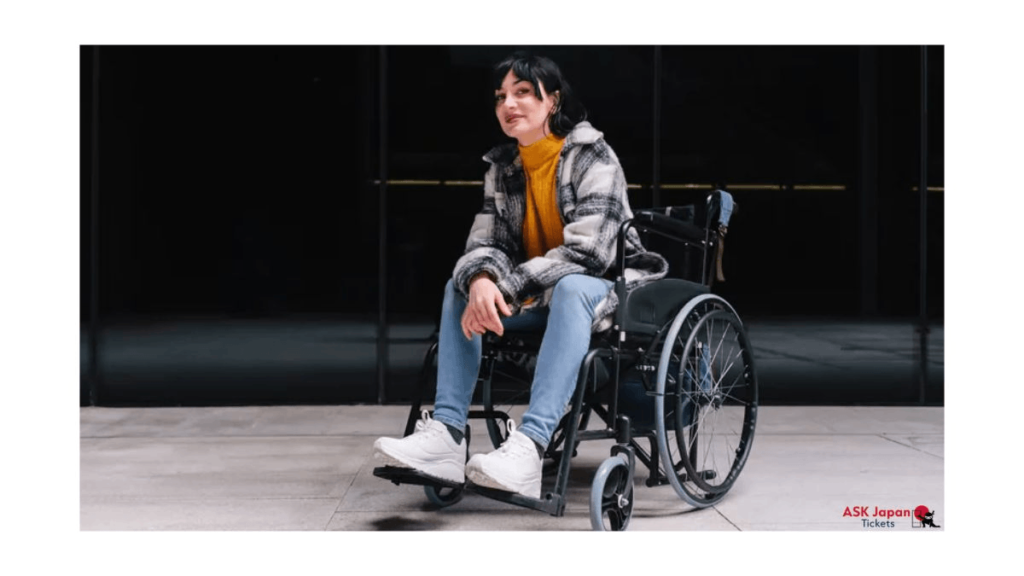
Wheelchair accessible concerts in Japan follow the same general rules for overseas visitors and local audiences.
However, international visitors often need to manage the application process across time zones and in Japanese. Therefore, preparation becomes especially important.
Wheelchair Accessible Concerts in Japan for International Visitors and Tourists
For international visitors, the most important step is to identify the accessible-seat application route before the ticket sale opens.
Some organisers accept wheelchair requests on different dates from the main ticket application. As a result, you should check the accessible-seat instructions as soon as the event announces its ticket details.
Planning wheelchair accessible concerts in Japan also involves arranging accessible transport and accommodation near the venue.
Our guide on how to buy Japan event tickets from overseas explains the wider ticketing process.
For Foreign Residents in Japan
Foreign residents follow the same application process as Japanese residents.
However, telephone-only application routes and documentation requests may require additional preparation.
Wheelchair accessible concerts in Japan for foreigners still depend on the organiser’s rules for each event. Therefore, check the official instructions rather than assuming that every concert follows the same process.
Accessible Seating Information and Language
Event notices usually publish accessible-seat information in Japanese, often in a short section within the ticketing details.
Some venues and promoters provide English information. However, not every event offers an English version.
If you cannot understand the instructions, ask the organiser or a ticket concierge to confirm the application process, deadlines and documentation requirements.
Coordinating Accessible Arrangements Through a Concierge
A ticket concierge can coordinate an accessible-seat request, from identifying the correct application route to confirming the arrangements with the organiser.
To help the team check your request accurately, provide clear information at the beginning.
What to Include in Your Request
Tell the concierge:
- The event, venue and preferred performance dates
- The number of wheelchair users and companions
- The type and approximate size of each wheelchair
- Whether the wheelchair user can transfer to a standard seat
- Any additional access needs, such as step-free routes or accessible toilets near the seating area
- Your travel dates and accommodation details, so the team can plan ticket receipt and delivery
What We Confirm
Our team reviews the organiser’s rules and confirms:
- Which accessible-seat application route applies
- Whether the organiser requires advance notice
- Whether the organiser may request documentation
- What each person will receive
If we cannot arrange an accessible space for a particular event, we inform you before any payment.
Wheelchair Accessible Concerts in Japan Checklist
Use this checklist when planning your concert visit.
- Find the wheelchair-access section in the organiser’s event notice.
- Identify the accessible-seat application route and its dates.
- Note any deadline for advance notification.
- Check whether the organiser may request documentation at the venue.
- Confirm how many companions may attend and their ticket conditions.
- Review the venue’s barrier-free information.
- Plan accessible transport to and from the venue.
- Allow extra time for entry and regulated exit.
Wheelchair Accessible Concerts in Japan: Practical Tips
For a smoother experience:
- Contact the organiser or your concierge as early as possible because wheelchair spaces are limited.
- Prepare your wheelchair’s type and dimensions before submitting a request.
- Confirm the nearest accessible station exit and the correct venue gate before event day.
- Keep your ticket and accessible-seat confirmation easy to access.
- Check the event’s instructions again shortly before travelling.
Upcoming Dates and Ticket Sales
The official sources listed below have published the following details. However, organisers may update ticketing information, so recheck the details before booking.
| Event | Event Dates | Venue | Advance Sale Opens | Wheelchair Arrangements |
|---|---|---|---|---|
| January Grand Sumo Tournament | 10–24 January 2027 | Ryogoku Kokugikan, Tokyo | 5 December 2026 | A wheelchair-seat ticket covers the user and one companion. Requests go through the association’s dedicated telephone line. Booking dates require confirmation from the organiser. |
| Maroon 5 Asia 2027 | 30 January, 31 January and 2 February 2027 | Tokyo Dome | To be confirmed by the organiser | To be confirmed by the organiser |
The Japan Sumo Association’s official tournament schedule provides the sumo dates. Tokyo Dome City’s official guide lists the venue’s barrier-free facilities.
For general information about accessible travel in Japan, consult the Japan National Tourism Organization.
How Ask Japan Tickets Can Help with Accessible Seating
Ask Japan Tickets’ Tokyo team follows each official ticketing stage and checks the accessible-seat application route for your event.
We also help manage the time-zone difference, Japanese-language instructions and communication with the organiser. As a result, you can understand the arrangements before making payment.
Event and Application Alerts
We notify you when the main ticket application and accessible-seat requests open. This helps you avoid missing an application window because of time-zone differences.
Lottery and Application Service
We submit applications correctly and on time, including any wheelchair-seat option that the organiser provides.
Local Payment Settlement
After a successful application, we complete payment in Japan within the organiser’s deadline so that you can secure the allocation.
Ticket Receipt in Japan and Delivery to Your Accommodation
We receive and hold physical tickets, then arrange delivery to your accommodation before the event.
Digital Ticket Setup Support
For smartphone tickets, we help you check that the tickets for you and your companions display correctly before event day.
However, the organiser determines availability, so we cannot guarantee a ticket or wheelchair space.
Before payment, our team confirms exactly what you will receive, including the ticket type, delivery method and any entry or documentation conditions.
You can find more information in the Ask Japan Tickets FAQs.
Conclusion
Wheelchair accessible concerts in Japan use a dedicated allocation of wheelchair seats, which visitors must request through the route specified by each organiser.
Most allocations provide space for companions. However, organisers assign the seat locations and may require advance notice or documentation.
Therefore, read the wheelchair section of each event notice, check the venue’s barrier-free information and plan accessible transport before travelling.
With the right preparation, international visitors can enjoy Japan’s concerts and live events with greater confidence.
Tell us which event you would like to attend, and our Tokyo team will confirm the available options and exactly what you will receive before any payment.
Wheelchair Accessible Concerts in Japan FAQ
How do I request a wheelchair seat for a concert in Japan?
You must request a wheelchair seat through the route specified by the organiser.
Some events include a wheelchair option in the main ticket application. Others ask you to contact the enquiry desk after securing a ticket. Meanwhile, some organisers accept requests only by telephone.
The wheelchair section of the event notice explains which route applies and whether you must provide advance notice.
Can a companion sit with a wheelchair user?
In most cases, yes. Wheelchair-seat allocations usually include space for at least one companion.
However, the organiser decides how many companions may attend and whether each person needs a ticket.
For example, Yomiuri Giants games at Tokyo Dome allow up to two companions per wheelchair user. Concert organisers may use different rules, so confirm the conditions for each event.
Is information about wheelchair accessible concerts in Japan available in English?
Some venues and promoters publish information about wheelchair accessible concerts in Japan in English. However, many event notices provide their wheelchair-seat instructions only in Japanese.
Venue barrier-free pages and the Japan National Tourism Organization offer useful general information.
For a specific event, our Tokyo team can review the organiser’s notice and confirm the arrangements in English before payment.
Can I buy accessible concert tickets in Japan after I arrive?
Sometimes you can arrange accessible tickets after arriving in Japan.
However, wheelchair spaces are limited, and some organisers require advance notice. Therefore, we strongly recommend arranging your seats early.
High-demand concerts may allocate wheelchair spaces well before the performance. The safest approach is to check the organiser’s application route and deadline as soon as possible.
Do I need to show documentation at the venue?
Some organisers ask visitors to present documentation, such as Japan’s disability certificate (shōgaisha techō, 障害者手帳) or an equivalent document.
Others do not require documentation.
Each organiser decides whether it accepts certificates issued outside Japan. Therefore, confirm the requirements for your event before travelling.
Our team checks the documentation conditions before payment so you know exactly what to bring.