Japan Concert Companion Ticket: Group and Paired Applications

Key Takeaway
- A companion (dōkōsha, 同行者) is a person who attends an event on the same application as the main applicant.
- Many Japanese ticket applications allow a fixed number of tickets per application, often two or four. A pair or small group therefore usually applies together under one applicant.
- Some applications ask for companions to be registered when the application is made. The organiser decides whether names can be changed later.
- Tickets requested in one application are generally allocated together. The organiser sets the seat location, which is often revealed only when tickets are issued.
- Entry conditions for companions differ between events, so check them for each event before payment.
A Japan concert companion ticket is a ticket for a person who attends with the main applicant, on the same application. In Japan, many popular concerts are allocated by lottery. The applicant applies for a set number of tickets that covers both themselves and their companions (dōkōsha, 同行者). Knowing how companions fit into an application is an important part of understanding how Japanese ticketing works, especially if you want to attend a concert with a friend in Japan.
This Japan concert companion ticket guide explains:
- what a companion is
- how companions are registered
- how many tickets one application can cover
- which entry conditions may apply
- how to submit a group request to a concierge
If you would like a Tokyo-based team to handle the process for your group, you can request ticket concierge assistance at any time. For current listings, browse our music events in Japan.
What Is a Japan Concert Companion Ticket?
A Japan concert companion ticket is for someone who attends on the main applicant’s application instead of applying separately. The applicant (mōshikomisha, 申込者) submits one application for a set number of tickets, and the other people on that application are the companions.
What is a 同行者 ticket?
The Japanese word dōkōsha (同行者) means “a person who goes along with” someone. On Japanese ticketing pages, a 同行者 ticket is simply a ticket used by one of the applicant’s companions. The term appears on application screens, entry notices and digital ticket instructions, so it is one of the most useful words for overseas fans to recognise.
Japan concert companion ticket explained in brief
The applicant and companions are treated as one unit throughout the sale:
- One application is submitted for the whole party.
- One lottery result applies to everyone on it. The result is either successful (tōsen, 当選) or unsuccessful (rakusen, 落選).
- One payment secures the allocation. The applicant usually makes it before the payment deadline (nyūkin kigen, 入金期限).
- Tickets are issued to the applicant. Depending on the ticket type and the organiser’s rules, the applicant may then pass companion tickets on.
Because the whole party shares one result, a group application for a Japan concert succeeds or fails as a whole. This is different from markets where friends buy their seats individually.
Payment and issuance for a shared application
Payment for a shared application is normally made in one transaction covering every ticket on it. Ticket PIA’s official help page, for example, explains that the person who made the purchase pays for all the tickets. It also explains that distributing tickets to companions transfers only the tickets, with no exchange of money through the service. Groups should therefore agree how they will share the cost before the application is made, because the ticketing system does not divide the payment.
Registering Companions at Application Time

Some applications ask for companions to be registered when the application is made. Others allow the details to be added later or do not ask for them at all. The organiser decides which approach applies. The rules can differ between the fan club presale, the play-guide presales and the general sale for the same tour.
Why registration is sometimes required
Registering companions is one of the measures organisers in Japan can use to allocate tickets fairly and to support entry checks. Japan’s Act on Ensuring the Proper Distribution of Show and Event Tickets (Act No. 103 of 2018) came into force on 14 June 2019. It prohibits the unauthorised resale of specified tickets above the sale price. The Act also asks organisers and sellers to take steps such as confirming that the person entering is the person entitled to enter. Registering companions in advance fits that aim.
Can a companion be changed?
The organiser decides whether a companion can be changed after the application. Some events allow a change before a stated date, some allow it only through an official procedure, and some do not allow it at all. Read the application notice carefully before applying. The Ask Japan Tickets team confirms these points for each request.
Fan club rounds
Fan club presales often have their own companion rules. Each fan club sets these rules, and they can change between tours. They must be checked for every event, so they are not generalised here.
Seating Together and Maximum Tickets per Application
Tickets requested in one application are generally allocated as a set, which is why fans who want to sit together apply together. The organiser sets the maximum number of tickets per application, which is often two or four.
How the limit works
If the limit is two tickets, a fan who wants two tickets for a Japan concert applies once for both. If the party is larger than the limit, a single application usually cannot cover the whole group. The organiser’s rules then decide whether more than one application is allowed, and separate applications may receive different results.
Seat location
Applicants generally do not choose their seats. The organiser assigns seat locations, and they are often revealed only when tickets are issued, sometimes shortly before the event. For digital tickets, the seat may appear in the app only on or close to the event day.
Group seating at sport
Some events sell seats designed for groups. At grand sumo, box seats (masu-seki) are traditional boxes on the floor that hold several people. According to the Japan Sumo Association’s official English ticket guide, one box holds four people. The guide lists a Box Seat B at approximately ¥42,000 on weekends and holidays and ¥40,000 on weekdays, including tax. The association’s Japanese price list also shows smaller and larger box formats in some rows.
| Party size | What to consider |
|---|---|
| Two people | Fits most per-application limits and is the most common request |
| Three or four people | Check whether the limit is four. At sumo, a box seat may suit the group |
| Five or more | Usually needs more than one application, where the organiser permits it. Seating together cannot be assured |
Entry Conditions That May Apply to Companions
The organiser sets the entry conditions for companions, and they differ from event to event. Some events admit companions without any further steps. Others require the applicant and companions to enter together, or confirm the identity of ticket holders at entry (honnin kakunin, 本人確認).
General patterns
- Entering together. Some events ask the applicant and companions to arrive and enter at the same time.
- Identity confirmation. Some organisers confirm the identity of ticket holders at entry, particularly for high-demand concerts and fan club allocations.
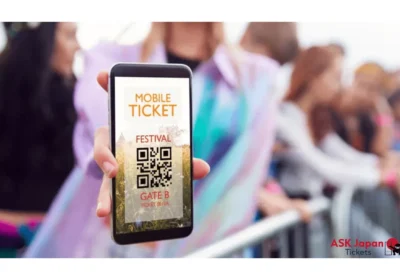
- Digital distribution. Digital tickets can often be distributed (bunpai, 分配) to companions within the app, so each person shows their own ticket. Our guide to the digital tickets japan app explains how this works.
- Age rules. Many events set age limits, and preschool children (mishūgakuji, 未就学児) may not be admitted. Read our guide to japan concert age restrictions before including younger companions.
Arriving at the venue
Where companions must enter with the applicant, the whole group should meet before joining the entry queue. Large venues such as Tokyo Dome, which is served by Suidobashi, Korakuen and Kasuga stations, have several gates and heavy crowds before the doors open (kaijō, 開場). Agree a meeting point near the correct gate and allow time for any identity confirmation, so the group can enter together smoothly.
Checking conditions before payment
These conditions are specific to each event, so you cannot assume them from one tour to the next. Before any payment, the Ask Japan Tickets team confirms the entry conditions that apply to your request, including any that affect companions.
Japan Concert Companion Ticket for Overseas Fans

For overseas fans, a Japan concert companion ticket works in the same way as for domestic fans. The difference lies in the practical planning: time zones, travel arrangements and following announcements written in Japanese.
Practical points for travelling groups
- Time zones. Application windows, results and payment deadlines run on Japan Standard Time (JST, UTC+9), with no daylight saving time. The group should agree who is following each deadline.
- Travelling together. Where an event asks companions to enter with the applicant, plan for the group to arrive at the venue together.
- Timing of sales. Applications open in stages, often months before the event. Our guide to when do japan concert tickets go on sale explains the typical sequence.
Japan concert companion ticket for international visitors and residents
The same principles apply to international visitors and to foreign residents of Japan. Residents follow deadlines in their own time zone, while visitors must convert each time. In both cases, a Japan concert companion ticket for international visitors depends on the organiser’s rules for that event.
Following companion rules in English
Japanese application notices are usually published in Japanese first, and the companion rules are often in the detailed notes (chūi jikō, 注意事項). When no translation is offered, reading these notes in full is the best way to understand a Japan concert companion ticket in English.
Submitting a Group Request to a Concierge
A group request to a concierge works best when it describes the whole party from the start. The more complete the request, the more accurately the team can confirm which routes are available and what each person will receive.
What to include in your request
- The event, with the city, venue and preferred performance dates.
- The number of tickets, and whether sitting together is essential or only preferred.
- Seat preferences, such as reserved seats or a particular seat category.
- The ages of everyone attending, so that any age rules can be checked.
- Your travel dates and accommodation area, so that ticket receipt and delivery can be planned.
Requests for larger groups
If your party is larger than the ticket limit, tell us which members most want to sit together. The team can then explain how the request could be divided into pairs or smaller groups, where the organiser permits more than one application. Each application is decided separately, so the team will set out clearly what each part of the group could receive and the conditions that apply.
What happens next
The team reviews the request and confirms the route, what each person will receive and the quote before any payment. Where the group is larger than one application allows, the team explains the options available under the organiser’s rules.
Japan Concert Companion Ticket Checklist
This Japan concert companion ticket checklist summarises the steps for any pair or group.
- Agree the size of the party and who will be the applicant.
- Check the maximum number of tickets per application.
- Read the companion rules in the application notice.
- Note whether companions must be registered at the time of applying.
- Check the age rules for every member of the group.
- Confirm the entry conditions, including whether companions must enter with the applicant.
- Record the application window, result date and payment deadline in JST.
- Plan how you will receive and distribute tickets, and how the group will arrive at the venue together.
Japan concert companion ticket tips
- Apply for exactly the number of tickets the party needs.
- Keep every member of the group informed of the result and payment dates.
- Where tickets are digital, confirm that each companion’s smartphone can display them.
Upcoming Dates and Ticket Sales
Official sources have published the dates below. Re-check them with the organiser before booking.
| Event | Event dates | Venue | Advance sale opens |
|---|---|---|---|
| January Grand Sumo Tournament | 10 to 24 January 2027 | Ryogoku Kokugikan, Tokyo | 5 December 2026 |
| Maroon 5 Asia 2027 | 30 January, 31 January and 2 February 2027 | Tokyo Dome | Current sale stage to be confirmed by the organiser |
The sumo dates are taken from the Japan Sumo Association’s official tournament schedule. The association publishes box seat formats and prices for each tournament on its official ticket page.
How Ask Japan Tickets Can Help with Companion and Group Tickets
Ask Japan Tickets’ Tokyo team follows each official sales stage on behalf of you and your companions, from the first announcement until your tickets are ready. We cover the time-zone gap, handle the Japanese-language steps and confirm each step clearly with you.
- Event and Application Alerts. We notify you when applications open, so your group does not miss a window.
- Lottery and Application Service. We submit applications correctly and on time, for the number of tickets your party needs within the organiser’s limits.
- Local Payment Settlement. After a successful result, we complete payment in Japan within the deadline so the allocation is secured.
- Ticket Receipt in Japan and Delivery to Your Accommodation. We receive and hold physical tickets for your group, then deliver them to your accommodation before the event.
- Digital Ticket Setup Support. For smartphone tickets, we help confirm that the tickets display correctly, including any tickets distributed to companions.
Availability is decided by organisers and lottery outcomes, so no ticket, seat or seating arrangement can be guaranteed. Before any payment, our team confirms exactly what each member of your group will receive, including the ticket type, how it is received and any entry conditions set by the organiser. You can find further details in the Ask Japan Tickets FAQs.
Conclusion
A Japan concert companion ticket lets a pair or small group apply together under one applicant and share one lottery result. Where the organiser allows it, the group can also sit together. The organiser sets the number of tickets per application, whether companions must be registered and which entry conditions apply, so check each event on its own terms. Once those points are confirmed, fans anywhere in the world can share Japan concert tickets and plan to attend together with confidence.
FAQ:

Japan Concert Companion Ticket FAQ
Can I attend a concert with a friend in Japan on one application?
Yes. In most cases you can attend a concert with a friend in Japan by applying for two tickets on one application, with your friend as the companion (dōkōsha, 同行者). The organiser sets the maximum number of tickets per application and any companion rules. You both share one lottery result, and the allocation is secured once payment is completed by the deadline.
Does a Japan concert companion ticket for tourists work differently?
A Japan concert companion ticket for tourists follows the same rules as for any other fan, because the organiser sets the conditions for each event. The practical differences are time zones and travel planning. Follow each application window, result date and payment deadline in Japan Standard Time. If the event asks companions to enter with the applicant, plan to arrive at the venue together.
Is a Japan concert companion ticket for foreigners subject to different rules?
Most application notices do not set different rules for a Japan concert companion ticket for foreigners. The organiser’s rules apply equally to every applicant and companion. What varies is the event itself: the ticket limit, companion registration and entry conditions can all differ. The Ask Japan Tickets team confirms the conditions that apply to each request before any payment.
Can I buy tickets in Japan for a large group?
You can buy tickets in Japan for a large group only within the organiser’s limits, which often allow two or four tickets per application. For most event tickets in Japan, a group larger than the limit needs more than one application, where the rules permit it. Separate applications may receive different results, so seating the whole group together cannot be assured.
Can a companion be changed after the application?
This depends entirely on the organiser. Some events allow a change before a stated date or through an official procedure, while others do not allow changes at all. The application notice explains the rule for each event. Our team confirms it for your request before payment, so that your plans are based on accurate information.