How the Japanese Ticket Lottery Works: A Guide for Overseas Fans
Key Takeaway
- The Japanese ticket lottery (chūsen, 抽選) is the main method Japanese organisers use to allocate seats for popular concerts: fans apply during a set window and results follow on a fixed date.
- A successful result gives the right to purchase, not a ticket, and payment must be completed by the stated deadline.
- Large events usually run several rounds, from fan club presale to general sale, so an unsuccessful application does not end the process.
- Every date and time is published in Japan Standard Time (JST, UTC+9), which has no daylight saving.
- Seats are generally assigned by the organiser’s system and are often revealed only when tickets are issued.
Japan allocates tickets for most popular concerts by lottery, not by queue. This japanese ticket lottery guide explains each stage for readers outside Japan, from the first fan club round to payment and issuance, so that the process is clear before any application window opens. Applications are made through official channels, in Japanese and on Japan Standard Time. If you would like support at any stage, you can request ticket concierge assistance and our Tokyo team will confirm the route and exactly what you will receive before any payment.
The principles below apply to many of the music events in Japan that attract international audiences, and they show how Japanese ticketing works across the wider live entertainment sector. Ticket PIA, e+ and Lawson Ticket each publish English-language pages, and this article presents the japanese ticket lottery in english so that the terms on those pages are familiar before you apply.
What Is a Japanese Ticket Lottery (Chūsen) and Why Does Japan Use It?
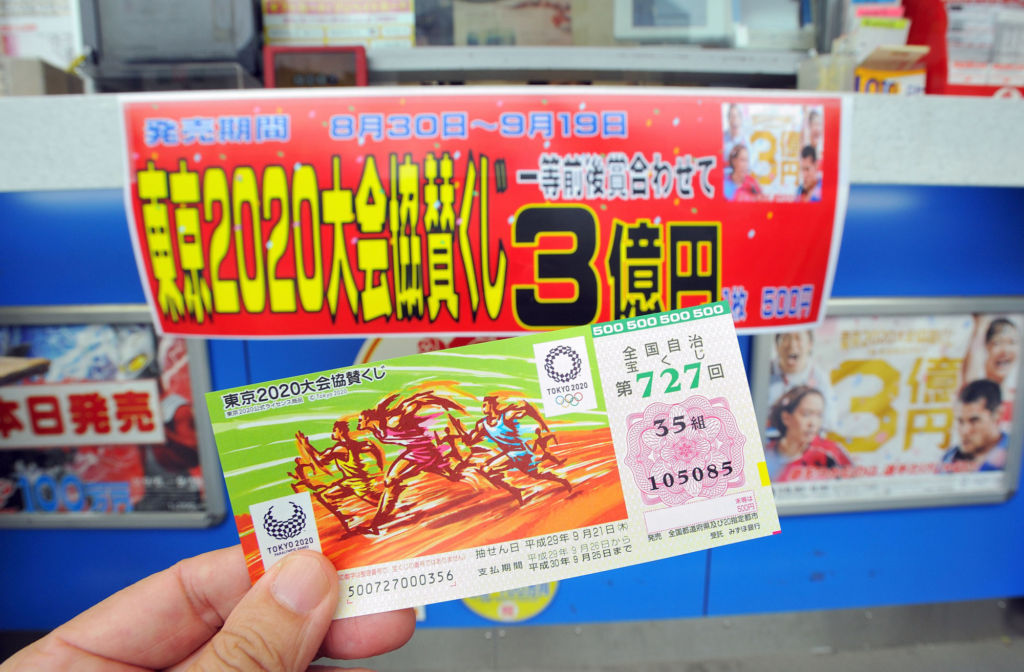
A Japanese ticket lottery is a sales method in which fans apply during a set period and the organiser allocates tickets by draw instead of by speed of purchase. The Japanese term is chūsen (抽選), meaning lottery or draw. Readers who look up the 抽選 ticket meaning will find the word on almost every presale page for a major concert, usually beside the application period and the date of results. Searches for chusen ticket Japan lead to the same process, and some English-language pages call it a ballot, so a search for ticket ballot Japan describes the same system.
Japan uses lotteries because demand for popular events regularly exceeds the number of seats. A lottery gives every applicant in a round a fair chance within the rules of that round, instead of rewarding whoever refreshes a page fastest. Ticket prices are set at face value by the organiser, and Japanese law supports this approach to fair distribution, as explained later in this guide.
Who Runs the Lottery?
The organiser (shusai, 主催) owns the event and decides how tickets are sold, in which stages and at which prices. Authorised sellers called play guides (purei gaido, プレイガイド) carry out the sale. The four major play guides are Ticket PIA, e+ (pronounced “e-plus”), Lawson Ticket and Rakuten Ticket. A single event often sells through several of them at once, and each runs its own lottery round.
Why the Japan Concert Lottery System Is Designed This Way
The japan concert lottery system rests on three ideas: fair allocation of scarce seats, face-value pricing and organiser control over who sells tickets and how. These features belong to a coherent system with its own logic. Readers who want to see how it compares with queue-based sales abroad can read our overview of japan vs western ticketing.
What Is the Typical Sequence of Rounds from Fan Club Presale to General Sale?
Large events usually move through several sales stages, and not every event uses every stage or the same order. The sequence below describes the pattern most readers will meet.
- Fan club presale (fan kurabu senkō, ファンクラブ先行). This round is reserved for members of the artist’s official fan club, usually by lottery and often in several rounds. The japan fan club presale stage is explained in full in a separate guide.
- Release-linked presale. Some presales follow the purchase of a qualifying release, typically a CD whose packaging contains a serial code (シリアルコード, shiriaru kōdo) that permits one application.
- Official and play-guide presales (senkō chūsen, 先行抽選). These lottery presales run through the organiser’s official site and the participating play guides, often in succession.
- First-come-first-served presale (senkō senchaku, 先行先着). Some events hold a presale that sells in order of purchase instead of by lottery.
- General sale (ippan hatsubai, 一般発売). This is the public sale, usually first-come-first-served. For high-demand events, little may remain by this stage.
- Additional releases. Seats released later, for example after stage production is finalised, including partial-view seats.
Why One Tour Can Have Many Application Windows
Because organisers, fan clubs and several play guides each run their own presale, one tour can produce a sequence of separate windows over several weeks. Each window has its own dates, so japan concert tickets are seldom sold in a single moment. Reading the official announcement for the full list of rounds is the first task for any applicant.
Ticket Limits and Entry Conditions
Many applications allow a fixed number of tickets per application, often two or four. Further conditions, including any that relate to companions (dōkōsha, 同行者) or to entry, are set by the organiser, differ between events and are published on each official page. The Ask Japan Tickets team confirms the conditions that apply to your request before any payment.
What Are the Application Windows, Result Dates and Payment Deadlines?
Each lottery has three fixed dates: the application window, the result announcement and the payment deadline, all set by the organiser and published in Japan Standard Time. Japan uses JST (UTC+9) throughout the year and does not change its clocks, so the gap between JST and a time abroad changes only when the reader’s own country changes its clocks. London, for example, is nine hours behind Japan in winter and eight hours behind in summer.
The table below shows how common times on Japanese sales pages convert to UTC, which readers can then adjust to their own location.
| Time shown on the official page (JST) | Equivalent in UTC |
|---|---|
| 12:00 | 03:00 |
| 18:00 | 09:00 |
| 23:59 | 14:59 |
The Application Window
Applications are accepted only during the window set for each round. In a lottery round, submitting within the window is what matters, not speed, but the closing time is firm. A late application is not accepted.
Result Announcements
Results are announced on a set date, through the channel the organiser describes. Readers searching for japan lottery results concert information will find a result date, and often a range of hours, on the official page. A successful result is tōsen (当選) and an unsuccessful result is rakusen (落選).
The Payment Deadline
A successful result gives the right to purchase. It becomes a ticket only when payment is completed. The payment deadline (nyūkin kigen, 入金期限) is short, and missing it normally forfeits the allocation.
How Do Payment Methods and Fees Work When You Buy Tickets in Japan?
Ticket prices in Japan are face-value prices set by the organiser, and the play guide adds its own fees on top. Readers who want to buy tickets in Japan from overseas should check the fee list on the official page of the seller concerned. According to Ticket PIA’s official charges page, the system usage fee is ¥330 per ticket and the issuance fee is ¥165 per ticket. The same page lists a payment fee of ¥330 per order for payment at 7-Eleven, FamilyMart or econtext, and no payment fee for credit card payment. It states that the special sales fee and the delivery fee vary by performance.
Other play guides publish their own fees, which differ by seller, event and payment method and may change. The figures above illustrate the structure of fees and should be confirmed on the official page at the time of any purchase. The Ask Japan Tickets service fee is quoted individually and is not part of these play-guide fees.
For event tickets Japan sellers commonly offer payment by credit card or at a convenience store (konbini, コンビニ). After a successful application, a buyer who chooses convenience-store payment receives a payment reference and pays at the store before the deadline. Payment by credit card follows the same deadline. Each organiser’s page states which payment methods apply to that event.
How Are Seats Allocated After a Successful Application?
Seats are generally assigned by the organiser’s system, not chosen by the applicant, and are often revealed only when tickets are issued, sometimes close to the event day. Seat categories include reserved seats (shitei-seki, 指定席), unreserved seats (jiyū-seki, 自由席) and standing room (tachimi, 立見). At standing venues such as live houses, tickets carry an entry number (seiri bangō, 整理番号), and staff call holders in blocks of numbers.
How Tickets Are Issued
Tickets reach the buyer in one of three forms, and the organiser’s page states which applies.
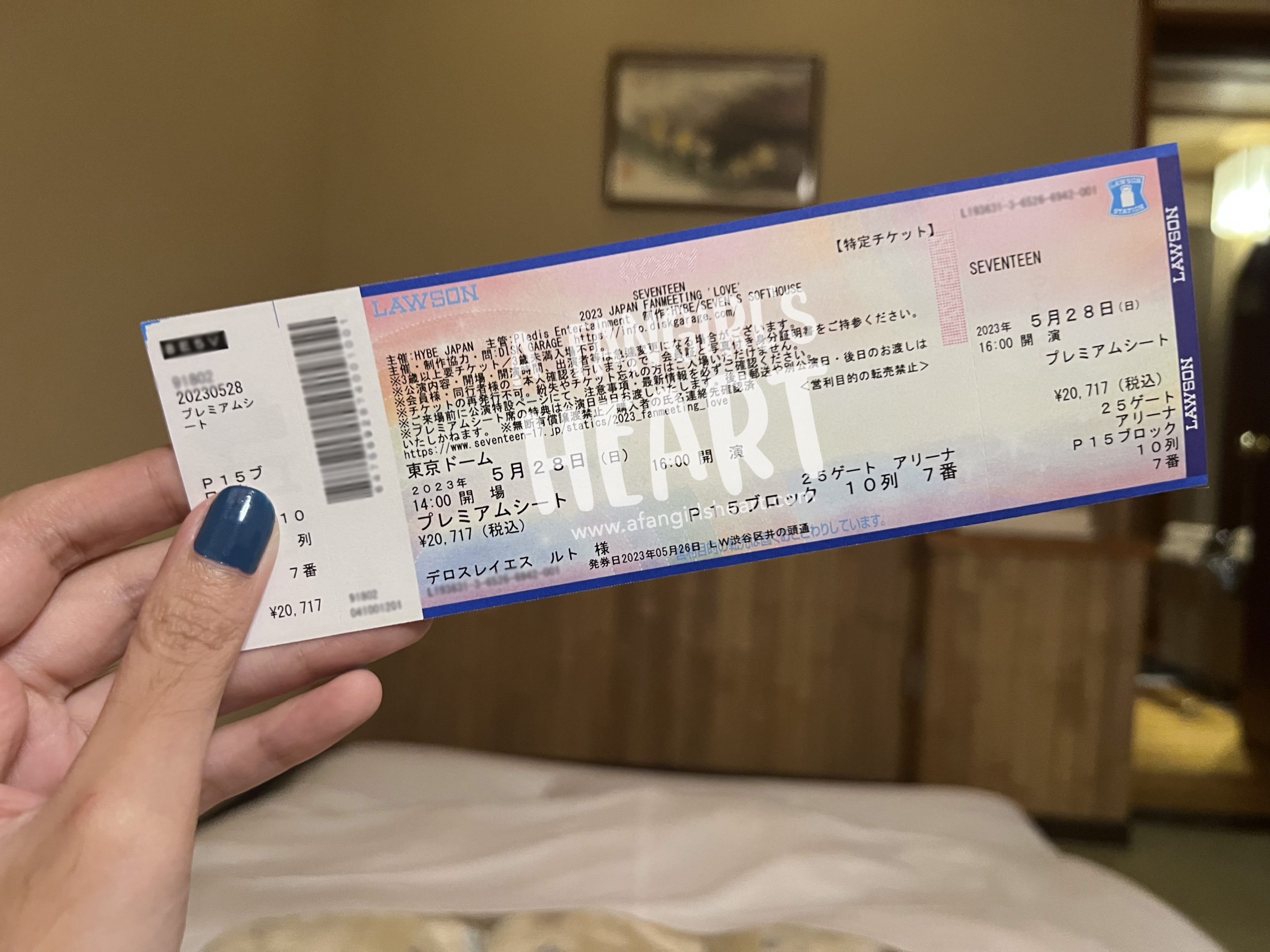
- Paper tickets issued at a convenience store (hakken, 発券). The buyer uses a reference number at the counter in 7-Eleven or at a multi-function terminal, such as Loppi at Lawson or the multi-copy terminal at FamilyMart. Issuance usually opens on a set date and closes before the event starts.
- Delivered paper tickets. Some tickets are sent by post or courier to an address in Japan.
- Digital tickets (denshi chiketto, 電子チケット). These are displayed in a smartphone app and can often be distributed (bunpai, 分配) to companions within the app. A charged phone and a data connection are practical necessities on event day.
Identity Confirmation at Entry
Some organisers confirm the identity of ticket holders at entry (honnin kakunin, 本人確認). Whether and how this applies differs by event, and the conditions are published by the organiser. The Ask Japan Tickets team confirms the conditions for your request before any payment.
A japanese ticket lottery for tourists follows the same stages as it does for residents, with the added consideration of timing travel around results and issuance. Visitors planning a trip around an event will find further guidance in our article on concert tickets japan for tourists, which is written for those who build a journey around a concert.
What Happens After an Unsuccessful Application?
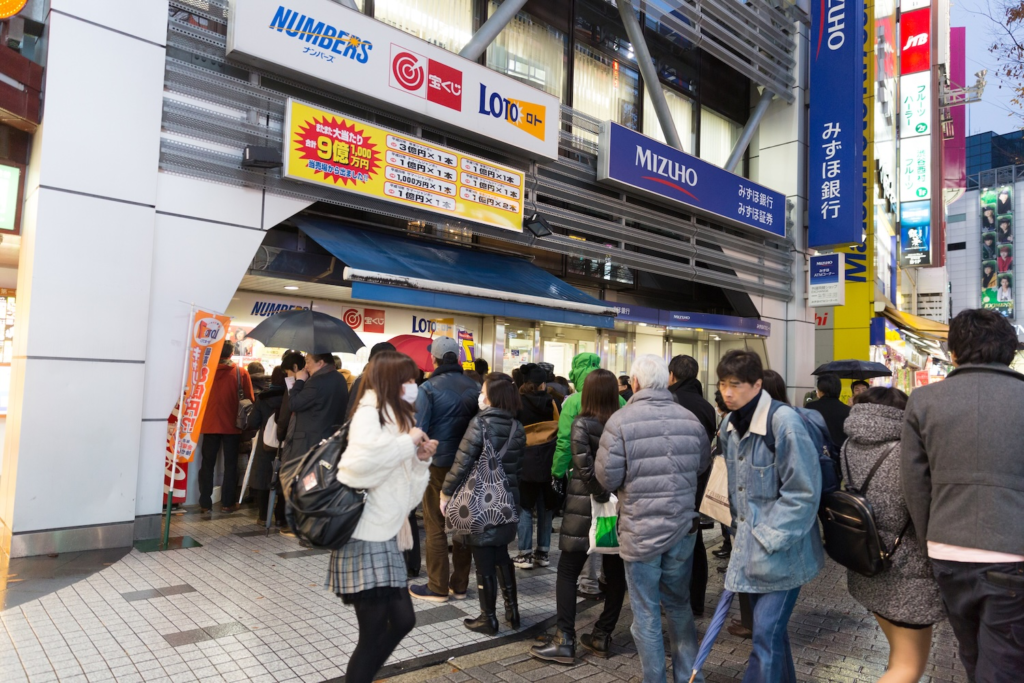
An unsuccessful result applies to that round only, and later rounds, general sale, additional releases and official resale may still offer tickets. The outcome of one lottery does not decide the outcome of the next, and each round has its own dates.
Later Rounds and General Sale
Most large events continue after a first presale with further presales, then the general sale. The general sale (ippan hatsubai) is usually first-come-first-served and opens at a time published in advance. Additional releases may follow, for example partial-view seats (mikire-seki, 見切れ席) released once stage production is finalised, and some events sell tickets on the day.
Status Labels on Sales Pages
Two labels appear often. The label 予定枚数終了 (yotei maisū shūryō) means the planned allocation for that sales channel or seat category has been reached. It does not always mean the whole event is permanently sold out, because later stages or releases may follow. The label 残りわずか (nokori wazuka) means few remain.
Official Resale
Many organisers and play guides operate official resale services (kōshiki risēru, 公式リセール). Through these, a ticket holder who can no longer attend may transfer a ticket at face value through an organiser-approved system, often in a window close to the event. These services operate with the organiser’s consent.
Japan also regulates resale by law. The Act on Ensuring the Proper Distribution of Show and Event Tickets by Prohibiting the Unauthorized Resale of Specified Show and Event Tickets (Act No. 103 of 2018) came into force on 14 June 2019. According to the Ministry of Justice’s Japanese Law Translation database, it prohibits unauthorised resale of specified tickets for profit, and the penalties include imprisonment of up to one year, a fine of up to ¥1 million, or both. This summary is for information and is not legal advice. Official resale is the route that fits within this framework.
Official Overseas Sales
A growing number of events offer official sales for people living outside Japan, run by the organiser or a play guide, typically with English pages and international payment methods. Allocations are usually limited and may open later than the domestic sale. Readers looking for a japanese ticket lottery for foreigners will find that the standard lottery described above is the main route for many events, and that official overseas sales are an additional route for some. The organiser’s official page states which applies.
Which Japanese Ticket Lottery Tips Help First-Time Applicants?
Three habits matter most for a first-time applicant: reading the official announcement closely, converting every time to your own time zone and noting every deadline. Every japanese ticket lottery for overseas fans begins with the same question, which is who the organiser is and what dates it has published.
Practical Japanese Ticket Lottery Tips
- Start from the organiser’s official announcement. Dates, ticket limits and conditions are set there, and approved sources such as the organiser, the venue and the official play guide pages take priority over any summary.
- Convert every time once, then write it down. Record the application window, the result date and the payment deadline in your own time zone.
- Treat each round as separate. Each round has its own window, result date and payment deadline.
- Keep travel plans flexible. Avoid committing to non-refundable travel until a ticket has been paid for and issued.
- Plan for the seat reveal. Seat positions are often shown only at issuance, so a seat preference is not a promise.
- Use official resale only. If plans change, official resale services transfer tickets at face value with the organiser’s consent.
Japanese Ticket Lottery Checklist
- Confirm the organiser, venue and event dates on an official page.
- List every sales round and its application window in JST.
- Convert each window, result date and payment deadline to your own time zone.
- Note the ticket limit per application and any entry conditions the organiser publishes.
- Decide the payment method and keep the payment deadline in view.
- Check how and when tickets are issued: convenience store, delivery or smartphone.
- Check whether the event offers an official overseas sale.
- Hold travel bookings flexible until tickets are paid for and issued.
How Ask Japan Tickets Can Help with the Japanese Ticket Lottery
Ask Japan Tickets supports the japanese ticket lottery for international visitors by following each official sales stage on your behalf, and our Tokyo team confirms exactly what you will receive before any payment. Four service lines apply to this topic.
- Event and Application Alerts notify you when applications and sales open, so no window is missed across time zones.
- Lottery and Application Service submits applications correctly and on time for every round you wish to enter.
- Local Payment Settlement completes payments made in Japan within the deadline set after a successful application.
- Ticket Receipt in Japan receives, checks and safely holds physical tickets until you arrive.
Availability is decided by organisers and by lottery outcomes, so the team does not guarantee any ticket or seat. Before any payment, the team explains the ticket type, how and where it is received and any entry conditions set by the organiser. Quotes are individual and depend on the event and the services needed. Common questions about the service are answered in the Ask Japan Tickets FAQs.
Conclusion
The japanese ticket lottery explained above follows a consistent sequence: an application window, a result date, a payment deadline and, for successful applicants, issuance in the form the organiser chooses. The system distributes scarce seats fairly, and each stage runs on Japan Standard Time under rules set by the organiser. An unsuccessful result is not the end, because later rounds, general sale and official resale may still offer tickets. Readers who understand these stages can plan applications, payments and travel with confidence. Tell us which event you would like to attend, and our Tokyo team will confirm the options and exactly what you will receive before any payment.
FAQ: Japanese Ticket Lottery FAQ

What is a Japanese ticket lottery?
A Japanese ticket lottery (chūsen, 抽選) is a sales method in which fans apply during a set window and the organiser allocates tickets by draw. Results are announced on a fixed date, and successful applicants then pay by a stated deadline. It is the main method for popular concerts and is run by organisers and official play guides.
Does a winning result mean I have a ticket?
A winning result (tōsen, 当選) gives the right to purchase, and the ticket exists only when payment is completed. The payment deadline is short, and missing it normally forfeits the allocation. Seat positions are generally assigned by the organiser and often revealed only when tickets are issued. The Ask Japan Tickets team explains what you will receive before any payment.
Which time zone do Japanese ticket lotteries use?
Japanese ticket lotteries use Japan Standard Time (JST, UTC+9). Application windows, result announcements and payment deadlines are all published in JST. Japan does not use daylight saving, so the offset from UTC stays constant throughout the year. Converting each time to your own time zone, and writing it down, helps avoid missing a deadline.
What can I do if my application is unsuccessful?
An unsuccessful result (rakusen, 落選) applies to that round only. Later presales, the general sale and additional releases may still offer tickets, and some events have official overseas sales. Official resale services transfer tickets at face value with the organiser’s consent. The label 予定枚数終了 means a planned allocation has been reached, not always that the event is sold out.
Is there a japanese ticket lottery for tourists?
Visitors from overseas follow the same sales stages as other fans, according to the conditions each organiser publishes on its official page. Some events also offer official sales for people living outside Japan. Because conditions differ by event, the Ask Japan Tickets team confirms the route and the entry conditions for your request before any payment.